
Breast Augmentation in Plymouth, MI
Breast augmentation, or breast enlargement, is a cosmetic surgery procedure designed to improve the size and shape of the breasts. The tremendous popularity of this procedure at Lytle Plastic Surgery and across the United States is due to the very high rate of patient satisfaction. After breast implant surgery, most women are thrilled with their new appearance and improved self-esteem.
Board-certified plastic surgeon Dr. Ian Lytle provides breast augmentation in Plymouth and has helped hundreds of women throughout Wayne County and the greater Detroit metropolitan area achieve shapelier breast contours. He takes a personalized approach to every procedure, carefully selecting implant size, shape, and placement based on each patient’s anatomy and goals.
Breast Augmentation Basics
Women choose to have breast augmentation for a variety of reasons. Some feel that their breasts are underdeveloped or asymmetrical. Others simply want to increase the size of their breasts to achieve a curvier figure.
Breast augmentation (or augmentation mammoplasty) is usually performed on an outpatient basis under general anesthesia or IV sedation. During the surgery, breast implants are placed either directly behind the breast or behind the chest muscle. In some cases, a breast lift (mastopexy) procedure is done at the same time.
Breast implants are made of a silicone shell that is filled with either saline (salt water) or silicone gel. While women from all age groups can be candidates for breast augmentation, the FDA stipulates that potential patients must be at least 18 years old for saline breast implants or 22 years old for silicone breast implants.
What Breast Augmentation Surgery Won’t Do
Breast augmentation does not correct severely drooping breasts. A breast lift may be required in conjunction with breast augmentation if you have significant sagging and want to restore a more youthful breast position in addition to enlarging your breasts. Breast lift surgery can often be done at the same time as your augmentation or may require a separate operation.
Dr. Lytle’s Breast Augmentation Technique
Women considering breast augmentation are surprised to learn that the surgery and recovery process can be easier and more comfortable than they may expect. Dr. Lytle is known for his personalized approach, meticulous surgical technique, and commitment to creating natural-looking results that complement each patient’s unique body proportions.
By combining advanced surgical methods with detailed implant planning and attentive patient care, Dr. Lytle helps patients throughout Plymouth, Northville, and the greater Metro Detroit area achieve beautiful results with minimized downtime and a smooth recovery experience.
Key Features of Dr. Lytle’s Technique:
- Precise system for selecting implant size and shape
- Gentle surgery with little to no bruising
- Shorter surgery time
- Nerve blocks performed for post-operative comfort
- Comfortable recovery; most patients feel significantly better within a few days
- No sutures to remove
- No drainage tubes
- No wraps or bandages
Schedule Your Complimentary Consultation
Breast Augmentation Before-and-After Gallery
Before-and-after photos are one of the most helpful ways to understand what is possible with breast augmentation performed by Dr. Lytle.
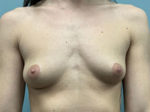 Before
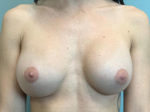 After
AfterBreast Augmentation Gallery
View before-and-after pictures
*Individual results may vary
Breast Augmentation Procedure Overview
The surgery usually takes about one to two hours and is performed in an accredited surgical facility. Patients are placed under general anesthesia or IV sedation. A small incision is made, usually in the breast crease. Dr. Lytle then creates a space or “pocket” into which the breast implant is inserted.
The implant is placed either behind the breast tissue (sub-glandular) or behind the pectoral muscle (sub-pectoral). A sizer (a temporary implant) is first placed into this pocket to be certain that the selected implant has the desired volume and fit. If not, a different sizer is placed until the desired volume and shape are obtained.
After carefully assessing the breast for size, shape, and symmetry, the implant is placed. The incisions are closed with dissolvable sutures and surgical glue. A small gauze dressing and a surgical bra are then placed.
Implant Options for Breast Augmentation
For women having breast enhancement surgery, one of the most important decisions is which breast implant to use. There are two types of breast implants: saline breast implants and silicone breast implants.
Dr. Lytle uses both saline and silicone implants with great success. During your consultation, he will discuss all implant options and help you decide which is best for you.
Saline Breast Implants
- Filled with sterile saline (salt water). Since saline is like normal body fluid, it is safe and easily absorbed if the implants were to leak.
- Leaks are easily detected due to implant deflation.
- Saline is added after the breast implant is placed.
- The unfilled saline breast implant is able to fit through an extremely small incision (about one inch in length).
- The volume of saline can be adjusted to meet your desired goal or to correct a size difference between the two breasts.
- Less expensive than silicone implants.
- Rippling may be felt or seen in thin patients but rarely occurs due to placement behind the chest muscle.
Silicone Gel Breast Implants
- Look and feel very natural due to silicone gel’s thick, cohesive material that moves and feels like real breast tissue.
- A new generation of silicone gel implants made by Mentor are far superior to those used in the past and have a proven track record of safety.
- Silicone implants are preferred if there is a need to place implants on top of the muscle.
- Unlike saline breast implants which are filled during the surgical procedure, silicone breast implants come pre-filled with gel from the manufacturer’s factory. Because of this, they require a larger incision.
- While the cohesive gel material found inside the implant will not migrate into the body if the shell leaks, it may be more difficult to detect a leak.
- The FDA suggests that women have periodic MRI scans to ensure that silicone implants are intact.
- After two decades of intense study and research, the FDA declared silicone gel breast implants safe and approved their use in the United States.
Many women realize that breast implants are not meant to last forever, but they often do not know that saline breast implants and silicone breast implants have available warranties. These warranties can be discussed during your consultation.
Implant Placement
If you are interested in breast augmentation, you have options in regard to where the breast implant is placed. Dr. Lytle selects between submuscular and subglandular placement when performing breast implant surgery.
There are advantages to each method. Depending on your anatomy, including factors such as muscle thickness, original breast size, and skin thickness, he will help you decide which method of placement is right for you.
Subglandular Breast Implant Placement
The subglandular technique places the implant in front of the chest muscles and behind the breast tissue. This method is normally recommended for women who already have relatively large breasts or for women who participate in fitness competitions. There is an increased risk of rippling with this approach.
Submuscular Breast Implant Placement
Submuscular or sub-pectoral placement involves placing the breast implant underneath the chest muscle. In most cases, the muscle covers approximately two-thirds of the implant. The lower third of the implant is covered by the fascia and breast tissue.
Sub-pectoral placement is generally preferred for women with very small breasts or thin skin, as the additional coverage of the muscle will make your breasts appear more natural and reduce the chance of rippling.
While Dr. Lytle’s surgical technique will dramatically reduce your recovery time, getting your implants placed below the muscle will still take longer to recover from than a sub-glandular procedure.
Your Complimentary Breast Augmentation Consultation
During your consultation, you will learn more about Dr. Lytle, our practice, and our approach to breast augmentation. Just as importantly, we take the time to understand your goals, concerns, and preferences so we can create a surgical plan tailored specifically to you.
We offer complimentary consultations so patients can explore their options in a comfortable, no-pressure environment. Dr. Lytle encourages open discussion and wants you to feel relaxed, informed, and confident throughout the process. Our patient education program prioritizes answering your questions and helping you understand your options.
During Your Consultation
Your visit will include:
- Discussion of your aesthetic goals and concerns
- Review of saline and silicone implant options
- Hands-on implant sizing and evaluation
- A physical examination
- Medical history review
- Personalized recommendations based on your anatomy and proportions
Meet the Team
In addition to meeting with Dr. Lytle, you will also spend time with his nurse, Cindy, and patient coordinator, Kim. Our team is experienced, friendly, and committed to making your experience as comfortable and informative as possible.
Planning for Surgery
Once you and Dr. Lytle decide on the ideal surgical plan, the next step is to schedule your surgery date with Kim, our patient coordinator. We will see you at the office a week or two prior to surgery for a pre-op visit where we will review the surgical plan, confirm your breast implant selection, and take photographs.
During this visit to our Plymouth office, you will also receive prescriptions for medication and review the consent forms. You will receive specific instructions for things to avoid before surgery such as aspirin and smoking and will be advised not to eat or drink after midnight the night before your surgery.
Schedule Your Complimentary Consultation
Your Surgical Experience at Lytle Plastic Surgery
Your procedure will be performed at Lytle Plastic Surgery in Plymouth in a fully accredited surgical facility. Dr. Lytle works alongside board-certified anesthesiologists and an experienced operating room team, many of whom have been part of the Lytle Team for years.
You will be carefully monitored to ensure your safety and comfort. Dr. Lytle’s precise surgical technique and experienced team help procedures proceed efficiently while maintaining a strong focus on safety, comfort, and natural-looking results.
Recovery After Breast Augmentation Surgery
One of the greatest benefits Dr. Lytle’s patients receive is a much easier recovery. Following surgery, you will be monitored in the recovery room until you are completely awake and alert. Because of his gentle technique, there is no need for drainage tubes or wraps. Instead, you are placed in a surgical bra.
Most patients are feeling good and are ready for discharge after a brief observation period. The nerve block performed during surgery, a muscle relaxant and pain medication, helps to minimize discomfort.
The majority of women can be off of pain medication and back to their normal routine (with some limitations, of course) in a matter of days. We see you in the office several times over the course of the next year for continued evaluation. All sutures are dissolvable and hidden beneath the skin, so there are no stitches to remove.
What Our Patients Say
Dr. Lytle is the best doctor I’ve ever come across, he honestly cares, his bed side manner is awesome, his staff is the perfect mix of professional and silly. I would honestly go back to he office just to visit. They make you feel like family. In addition to that Dr. Lytle happens to be an amazingly skilled surgeon. I will send everyone I know to him. He did say he wanted to keep up with my healing progress but he wasn’t going to force me to make unnecessary appointments. I could see him as little or as much as I want to. (From Realself.com)
How Much Does Breast Augmentation Cost in Plymouth?
The cost of breast augmentation in Plymouth, MI varies because every procedure is customized to the patient’s anatomy, goals, and surgical plan. Several factors can influence overall pricing, including:
- Type of breast implants selected
- Surgical complexity
- Anesthesia fees
- Operating room costs
- Whether a breast lift or additional procedure is performed simultaneously
- Pre-operative testing or imaging
During your consultation, Dr. Lytle will develop a personalized treatment plan and provide detailed pricing information. Our team is happy to discuss financing options during your consultation.
While cost is an important consideration, choosing a qualified and experienced plastic surgeon is essential. Surgical expertise, patient safety, implant selection, and long-term results all play a major role in the overall value of your procedure.
Schedule Your Complimentary Consultation
FAQs about Breast Augmentation
Schedule Your Complimentary Breast Augmentation Consultation
If you are considering breast augmentation in Plymouth, MI, Dr. Lytle and his team are here to help you explore your options and feel confident in your decisions.
Contact Lytle Plastic Surgery today to schedule your complimentary consultation. We welcome patients from throughout Wayne County and the greater Detroit metropolitan area.
Important Breast Augmentation Terms to Know
- Areola: Pigmented skin surrounding the nipple.
- Augmentation mammaplasty: Breast enlargement or breast enhancement by surgery.
- Breast Augmentation: Also known as augmentation mammaplasty; breast enlargement or breast enhancement.
- Breast Implants: Medical devices placed in your body to enhance existing breast size or to reconstruct your breast. Breast implants fall into two categories: saline breast implants and silicone breast implants.
- Capsular contracture: A complication of breast implant surgery that occurs when scar tissue that normally forms around the implant tightens and squeezes the implant and becomes firm.
- General anesthesia: Drugs and/or gases used during an operation to relieve pain and alter consciousness.
- Hematoma: Blood pooling beneath the skin.
- Inframammary incision: An incision made in the fold under the breast.
- Intravenous sedation: Sedatives administered by injection into a vein to help you relax.
- Local anesthesia: A drug injected directly to the site of an incision during an operation to relieve pain.
- Mammogram: An x-ray image of the breast.
- Mastectomy: The removal of breast tissue, typically to rid the body of cancer.
- MRI: Magnetic Resonance Imaging; a painless test to view tissue similar to an x-ray.
- Periareolar incision: An incision made at the edge of the areola.
- Saline implants: Breast implants filled with salt water.
- Silicone implants: Breast implants filled with an elastic gel.
- Submammary or subglandular placement: Breast implants placed directly behind the breast tissue, over the pectoral muscle.
- Submuscular or subpectoral placement: Breast implants are placed under the pectoral muscle, which is located between the breast tissue and chest wall.
- Sutures: Stitches used by surgeons to hold skin and tissue together.
- Transaxillary incision: An incision made in the underarm area.
- Ultrasound: A diagnostic procedure that projects high-frequency sound waves into the body and records the echoes as pictures.
Related Blog Posts
Breast Augmentation: Changing Your Bathing Habits During Your Recovery
At Lytle Plastic Surgery, we don’t stop caring for you as soon as your procedure is over. There are a number of questions or concerns you may…Read More

Breast Augmentation: Correcting Breast Asymmetry
Breast asymmetry is a condition that causes one of the breasts to be a noticeably different size and shape from the other. This can make it difficult to find clothing that… Read More
Related Procedures
I look at my “before” photos and can’t believe I waited so long. Now I can finally wear dresses without a bra, and I’m proud of how I look in a bikini. - Natalie T.